Location
Zhenjiang, Jiangsu, China
Drainage-Free Automatic Bollards: Design, Installation and Buyer Guide

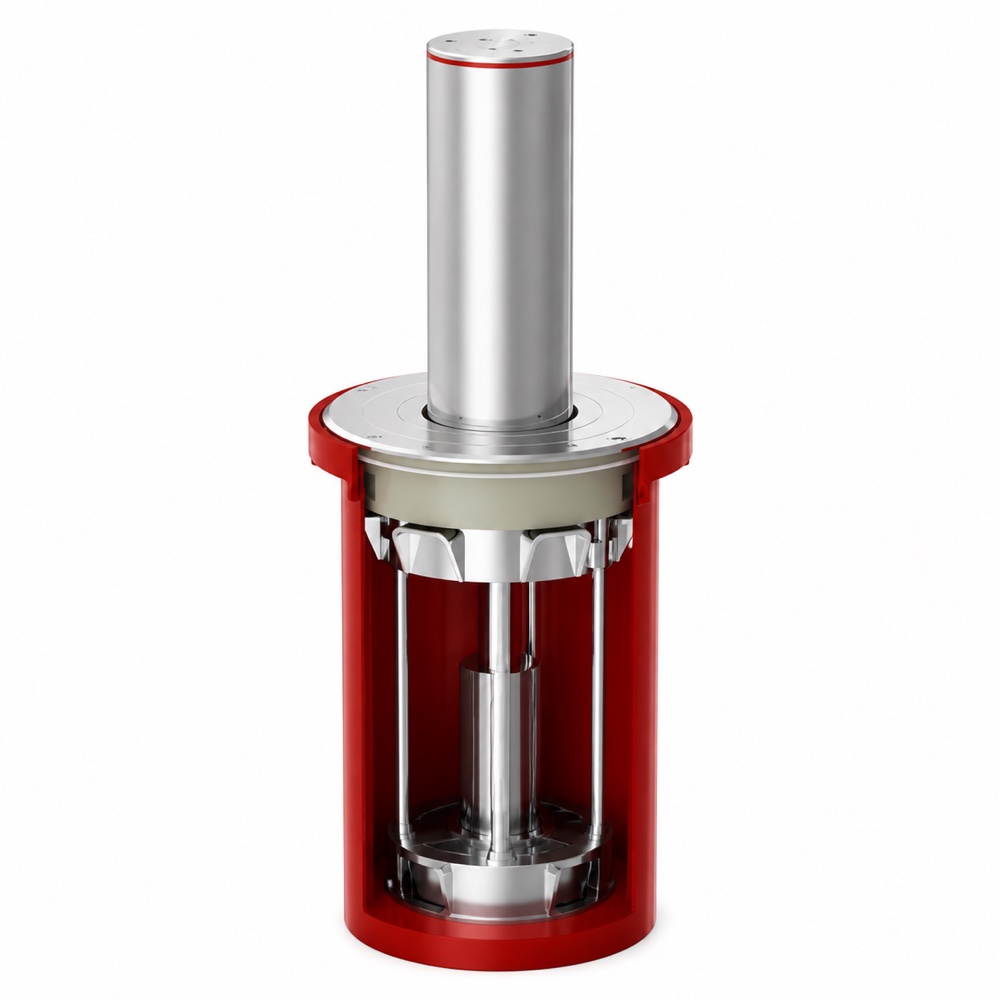
Automatic rising bollards are often installed at the lowest point of an entrance lane. That makes water, sediment and maintenance access just as important as column diameter or lifting speed. For overseas distributors, contractors and system integrators, a drainage-free automatic bollard can simplify a project—but only when the term is understood correctly.
This guide explains how a fully sealed drainage-free bollard works, what it can and cannot solve, and which specifications should be checked before placing an order.
What Is a Drainage-Free Automatic Bollard?
A drainage-free automatic bollard uses a sealed underground assembly designed to reduce the entry of water, mud and sediment into the drive mechanism. Instead of relying mainly on an open installation pit and a dedicated drain, it uses structural sealing, a tight gap around the moving column and controlled pressure equalisation.
The name does not mean that a project can ignore drainage. Surface water must still be managed, groundwater conditions must be assessed and the concrete foundation must be designed for the site. “Drainage-free” refers to the bollard’s sealed internal structure and reduced dependence on a conventional internal drainage route.
Why Conventional Bollard Pits Can Fail
In a conventional installation, rainwater or groundwater may collect in the underground pit. If drainage is slow, blocked or incorrectly connected, water and sediment can reach electrical and mechanical components. Typical consequences include corrosion, contamination around the moving column, slow operation and increased maintenance.
A sealed design addresses this risk at the product level. Multiple sealing points help isolate the internal mechanism. A narrow annular gap helps reduce mud and sand entry, while pressure-equalisation features help prevent pressure changes from working against the seals during repeated lifting cycles.
Five Design Details Buyers Should Check
1. Column diameter and rising height
These dimensions affect visibility, lane layout and the physical space available for the underground mechanism. The Baisen C68 family uses a 219 mm column and a 600 mm rising height.
2. Overlap depth
Overlap depth is the portion of the rising column supported inside the underground structure when the bollard is raised. Two products can look similar above ground but have different internal support. The C68 range provides 120 mm, 200 mm or 240 mm overlap depending on configuration.
3. Sealing and sediment control
Ask how the moving interface is sealed, how the product limits sand and mud entry, and how internal pressure is balanced. Avoid accepting a general “waterproof” statement without construction details or project documentation.
4. Maintainability
A modular removable assembly can reduce the amount of civil work needed when a component requires inspection. Confirm how the inner assembly is lifted out, whether the controller is accessible and which parts can be replaced on site.
5. Structural and test documentation
Pass-load, static-load and impact claims describe different tests and must not be treated as interchangeable. For a tender or high-security project, request the exact test method, laboratory or certification body, report number, tested configuration and validity. Do not specify a safety class from a marketing figure alone.
C68 Configuration Comparison
| Version | Overlap | Embed Depth | Weight | Typical Selection Reason |
|---|---|---|---|---|
| Standard | 120 mm | 775 mm | 58 kg | General commercial and parking access control |
| Reinforced | 200 mm | 880 mm | 65 kg | Greater internal support depth |
| 36V Battery | 120 mm | 775 mm | 58 kg | Backup operation where power continuity matters |
| 36V High-Strength | 240 mm | 880 mm | 100 kg | Thicker structure for demanding project specifications |
The table is a selection starting point. Final engineering must consider vehicle type, lane geometry, operating frequency, local regulation, required safety devices and civil conditions.
Drainage-Free vs Conventional Drained Installation
| Item | Sealed Drainage-Free Bollard | Conventional Drained Pit |
|---|---|---|
| Water strategy | Product-level sealing plus site water management | Drainage route and pit discharge are primary controls |
| Civil work | Can reduce dependence on complex internal drainage, subject to site | Usually requires a reliable drain, slope and discharge point |
| Sediment risk | Tight moving gap and seals help reduce entry | Depends heavily on pit cleanliness and drainage maintenance |
| Maintenance | Modular lifting design can simplify access | May require dewatering and pit cleaning before service |
Recommended Installation Workflow
- Survey the site: identify groundwater, surface-water direction, soil condition, lane width and vehicle path.
- Confirm the system logic: define how ANPR, access control, loop detectors, traffic lights and emergency controls will interact.
- Select the configuration: choose overlap depth, structure, power supply and backup requirements according to the risk assessment.
- Approve civil drawings: verify excavation, reinforcement, conduit, foundation, controller and service access before pouring concrete.
- Install and commission: check alignment, lifting movement, safety detection, manual/emergency operation and control logic.
- Document maintenance: establish inspection intervals for seals, moving clearances, fixings, controller and surrounding pavement.
Integration with ANPR and Access Control
In an automated entrance, the bollard is only one part of the system. A licence plate recognition camera or access-control reader sends an authorised signal to the controller. Safety detection confirms that the lane is clear, the bollard lowers, the vehicle passes and the system raises the bollard after the configured condition is met.
Before procurement, provide the desired sequence, interface type, fail-safe behaviour and emergency procedure. System integrators should also confirm local requirements for warning lights, signs, audible alerts, emergency services and pedestrian separation.
Questions to Ask a Chinese Bollard Manufacturer
- What are the column diameter, wall thickness, rising height and overlap depth?
- How is water and sediment entry controlled?
- How is pressure equalised inside the sealed structure?
- Can the internal assembly be removed without rebuilding the foundation?
- What is included in the control system and which safety devices are optional?
- Which test reports apply to the exact quoted model?
- What information is needed for OEM/ODM packaging, appearance or control logic?
- Which spare parts and commissioning documents are supplied?
Frequently Asked Questions
Is a drainage-free automatic bollard waterproof?
It is designed as a sealed structure to reduce water entry, but buyers should verify the exact protection documentation required by their project. No underground product removes the need for correct civil design and site water management.
Can it operate during a power failure?
A 36V battery configuration is available for projects requiring backup operation. Required cycles and backup duration should be confirmed against actual operating frequency, temperature and battery capacity.
Can one controller manage multiple bollards?
Group control can be designed according to lane quantity and operating logic. Provide the number of bollards, simultaneous or sequential movement requirements and external system interfaces.
How do I obtain an accurate quotation?
Send the quantity, country, application, lane drawing, power condition, integration requirements, civil conditions and required standards. This prevents a low initial quote from becoming an incomplete system cost later.
Next Step
For a project-specific recommendation, review the C68 fully sealed drainage-free automatic bollard and contact Baisen Access with your site plan and required operating sequence. We support overseas distributors, contractors, system integrators and project buyers with configuration selection and OEM/ODM discussion.
Need Specifications or Project Pricing?
Send this guide to your engineering team, download the 2026 technical datasheet, or request a page-specific wholesale quotation.