Location
Zhenjiang, Jiangsu, China
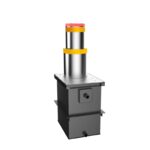
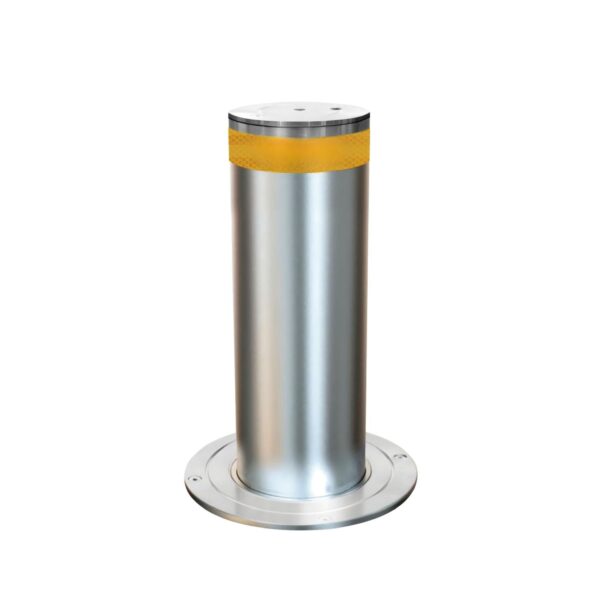
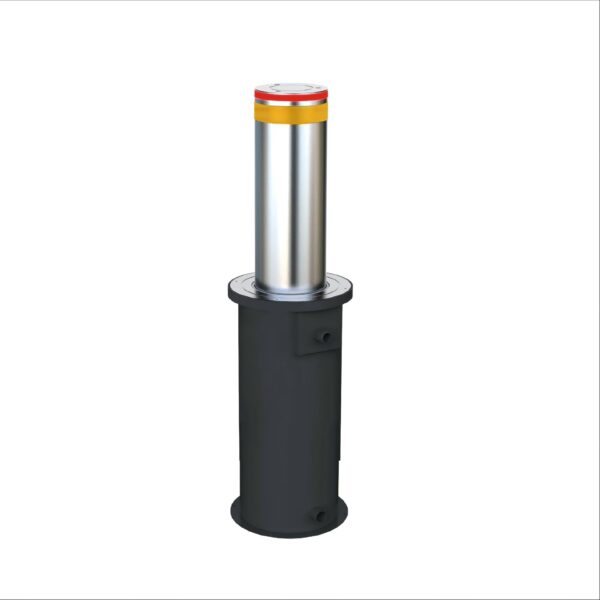
IP68 Telescopic Hydraulic Rising Bollard BS-SY603M
IP68 two-stage telescopic hydraulic rising bollard in 304 stainless steel, with 150mm/s movement, 50-ton vehicle load rating and shallow excavation design.
Description
IP68 Telescopic Hydraulic Rising Bollard BS-SY603M
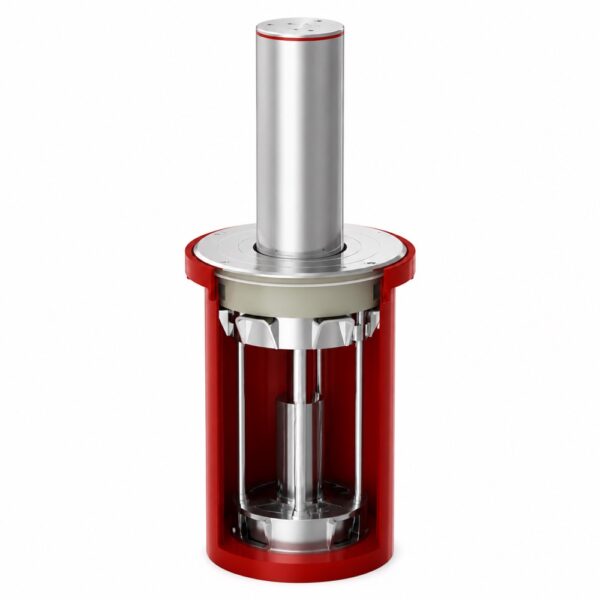
BS-SY603M is a two-stage telescopic hydraulic rising bollard designed for sites where reduced underground installation depth is important. Final hydraulic-control quantity, foundation, drainage, safety devices and performance evidence must be confirmed for each project.
Configuration Features
- Split hydraulic two-stage telescopic drive reduces required buried depth compared with conventional full-depth configurations.
- Controller options can support three or six automatic bollards, subject to the selected control cabinet.
- Interfaces may be configured for infrared sensors, vehicle loops and remote-control inputs.
- Top warning-light ring indicates bollard movement status.
- Backup-power controlled lowering is available for power-interruption planning.
Technical Parameters
| Column material | 304 stainless steel |
|---|---|
| Available protection specification | IP68; supporting test documentation must be confirmed |
| Column diameters | 219 mm and 273 mm (±0.5 mm) |
| Raised height | 600 mm (±2 mm) |
| Column wall thickness | 6 mm (±0.5 mm) |
| Lifting speed | 150 mm/s |
| Input voltage | AC 220V ±10% |
| Drive method | Split hydraulic system |
| Operating temperature | -25°C to +55°C |
| Recommended spacing | 1.2 m between bollards, subject to site design |
| Reflective warning | 50 mm reflective tape |
Performance Evidence to Confirm
For projects requiring IP rating, truck-load, immersion, operating-cycle or GA/T 1343-2016 evidence, request the applicable report for the exact ordered configuration. These values must not be treated as destination-market certification without document review.
Site and Installation Checklist
- Confirm available excavation depth, underground utilities and drainage strategy.
- Provide lane width, vehicle type, bollard quantity and proposed spacing.
- Specify controller capacity, loop detector, infrared sensor and emergency-lowering requirements.
- Review foundation, conduit routing, hydraulic lines and maintenance access with the installer.
- Confirm local electrical, traffic-management and safety requirements.
Request a Quotation
Send site drawings, required quantity, spacing, vehicle conditions, controller interfaces, finish and destination country. Read our automatic bollard buying guide or contact Baisen Access for project review.