Location
Zhenjiang, Jiangsu, China
Public Space Vehicle Ramming Protection: Bollard and Road Blocker Buyer Guide

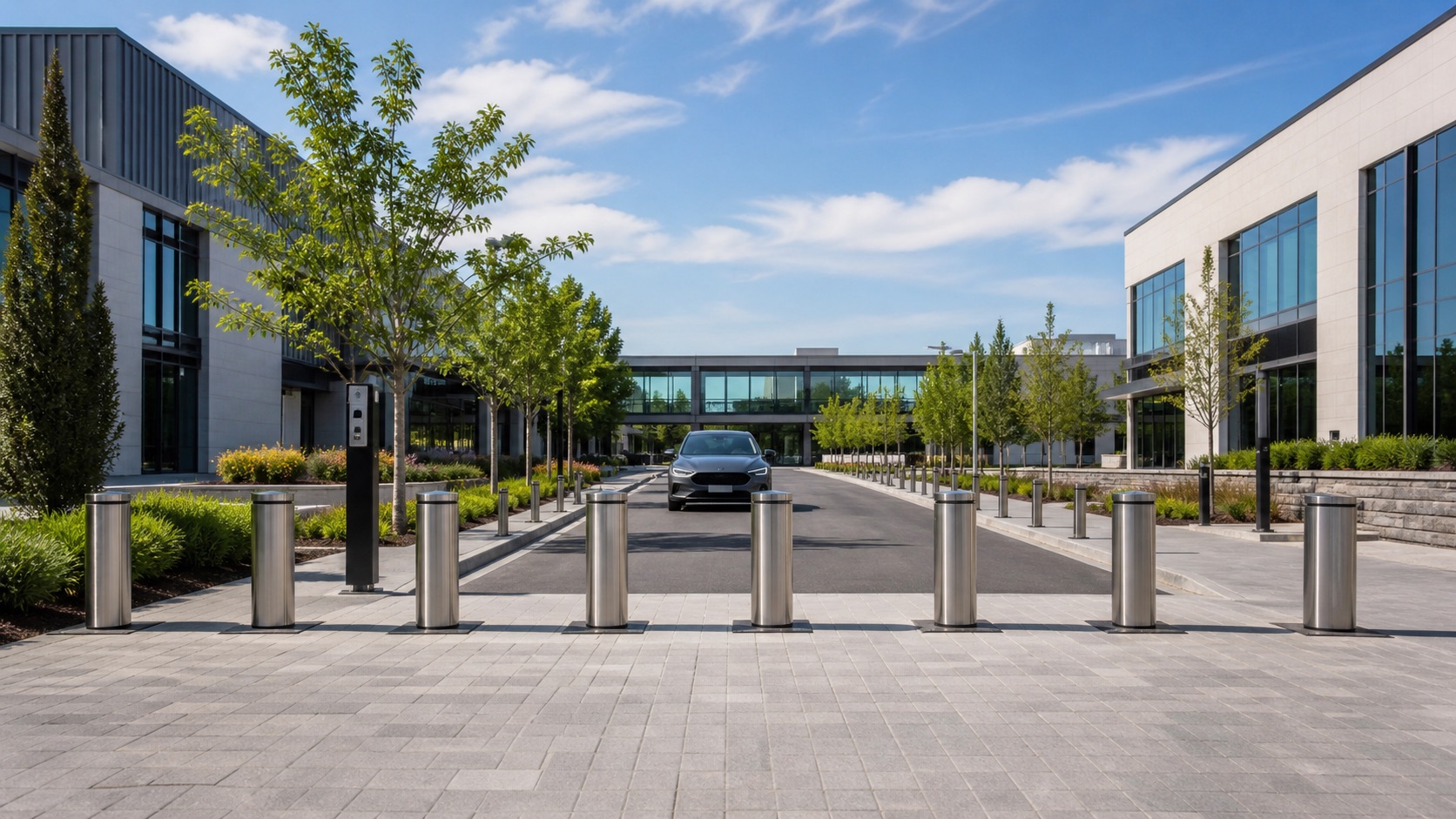
Public entrances, transport hubs, campuses, government facilities, commercial complexes and event venues need more than ordinary traffic control. A vehicle access design should separate pedestrians from vehicles, slow approaching traffic, verify authorized vehicles and provide a controlled response when a vehicle does not stop.
This buyer guide explains how automatic bollards, fixed bollards, road blockers, barrier gates and access-control systems can be combined for public-space vehicle protection projects. It is written for overseas distributors, security contractors, system integrators and project buyers.
Why Vehicle Access Protection Requires a Layered Design
No single device can solve every entrance risk. A practical system normally combines site layout, vehicle detection, identity verification, physical stopping equipment, safety sensors and operating procedures. The correct configuration depends on the protected asset, traffic volume, approach speed, lane width, emergency access and local regulations.
Main Equipment Options
Automatic Retractable Bollards
Automatic bollards provide controlled vehicle access while allowing the lane to remain open when authorized vehicles enter. They can be integrated with ANPR cameras, RFID readers, remote controls, guard stations and access-control software. Buyers should confirm cylinder dimensions, foundation depth, drainage conditions, power supply, operating frequency, emergency release and required impact performance.
For projects requiring a telescopic hydraulic configuration, review the BS-SY603M telescopic hydraulic rising bollard. Final dimensions, installation conditions and required performance evidence must be confirmed for the destination project before quotation.
Fixed Bollards
Fixed bollards are suitable for permanent perimeter protection, pedestrian zones and areas where vehicle access is not required. They can also be used beside automatic bollards to close vulnerable gaps and guide vehicles toward the controlled lane.
Road Blockers
Road blockers create a wide physical barrier across a vehicle lane and are commonly considered for higher-security entrances. Project planning should address civil-work dimensions, hydraulic or electromechanical operation, drainage, control logic, warning lights, traffic signals and emergency operating procedures.
Tyre Killers and Spike Barriers
Tyre-control equipment may be used in selected one-way or restricted vehicle lanes. Because incorrect operation can create safety risks, the traffic direction, warning signs, interlocking logic, emergency access and local legal requirements must be reviewed before selection.
Automatic Barrier Gates
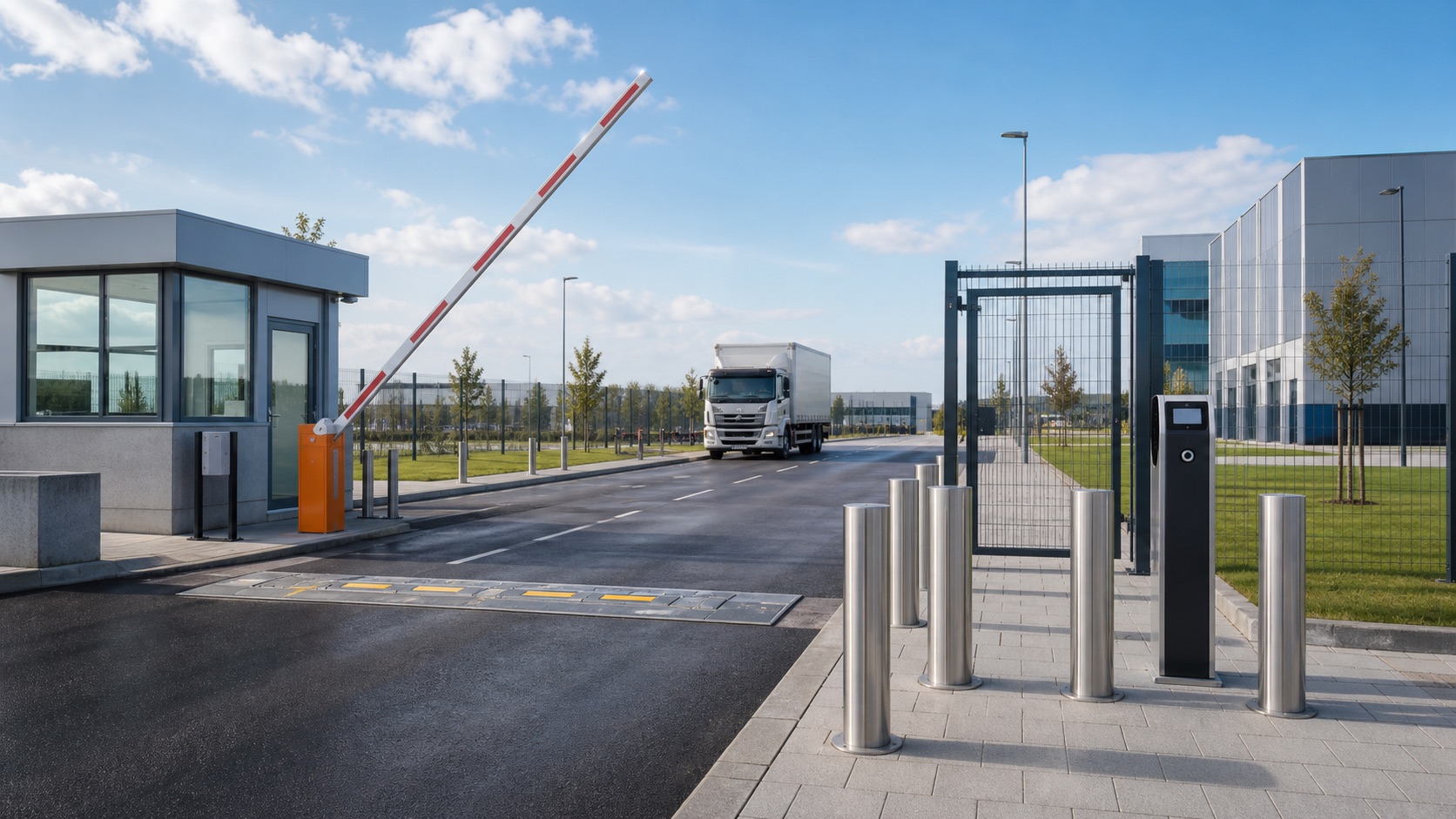
A boom barrier is primarily a traffic-management device. It controls vehicle flow and works well with ANPR, ticketing, RFID and parking software, but it should not be treated as a substitute for certified anti-ramming equipment where physical stopping performance is required.
Explore BAISEN ACCESS automatic bollards, automatic barrier gates and ANPR parking access systems.
Recommended Layered Entrance Architecture
- Approach zone: use road layout, signs, lighting and speed-control measures to reduce vehicle speed.
- Detection zone: use loop detectors, radar, photocells or vehicle sensors to identify approaching traffic.
- Identification zone: verify the driver or vehicle through ANPR, RFID, QR code, intercom or guard authorization.
- Control zone: operate the barrier gate, automatic bollards or road blocker according to permission and safety logic.
- Protected zone: use fixed bollards, pedestrian separation and restricted lane geometry to reduce bypass risks.
Typical Application Scenarios
The following are representative design scenarios, not claims about named customer projects. Final equipment selection must be based on the actual site survey, risk assessment and local compliance requirements.
Scenario 1: Public Plaza or Pedestrian District
Fixed bollards can define the pedestrian perimeter, while automatic bollards provide controlled access for service vehicles, emergency vehicles and authorized deliveries. The design should preserve pedestrian flow and emergency routes.
Scenario 2: Campus, Commercial Park or Government Facility
ANPR or RFID can verify authorized vehicles before the automatic bollards or road blocker opens. A guard station should retain manual control, event logs and an emergency override procedure.
Scenario 3: Industrial and Logistics Entrance
A boom barrier can manage normal traffic, while a road blocker or bollard line provides the physical security layer. Separate pedestrian protection, truck turning radius, queue length and safety sensors must be considered.
Project Selection Checklist
- Protected site type and security objective
- Number of entry and exit lanes
- Lane width and available installation depth
- Expected vehicle type, weight and approach speed
- Normal daily traffic and peak operating frequency
- Required access method: ANPR, RFID, remote control, guard station or software
- Power supply, backup power and manual emergency operation
- Drainage, groundwater, climate and corrosion environment
- Fire-engine, ambulance and emergency evacuation requirements
- Required impact-test standard, certification and local compliance documents
Rising Bollard Regulations and Compliance Checklist
There is no single universal regulation that applies to every rising-bollard project. Requirements vary by country, municipality, site type, traffic function and security objective. Buyers, designers and installers should verify the applicable rules with the local authority and qualified project professionals before procurement and installation.
- Planning and road authority: confirm permits, setbacks, lane markings, signage and any restrictions for equipment installed near public roads or pedestrian areas.
- Emergency access: coordinate fire-engine, ambulance and emergency-service access, including manual override, fail-safe or fail-secure logic and responsible operator procedures.
- Pedestrian safety and accessibility: preserve accessible routes, emergency egress and sufficient clear space between vehicle-control equipment and pedestrian circulation.
- Underground services and civil works: locate utilities before excavation and confirm foundation depth, drainage, groundwater conditions, ducts and maintenance access.
- Electrical and control safety: verify local electrical rules, grounding, isolation, surge protection, backup power and control-cabinet placement.
- Operational safeguards: define vehicle detection, photocells, warning lights, audible alerts, traffic signals, interlocks and manual-release procedures.
- Performance evidence: when impact performance is required, request the report for the exact model, foundation and installation configuration. Do not apply one model’s test result to another product.
- Inspection and maintenance: establish commissioning checks, routine inspection, drainage cleaning, emergency-operation tests and service records.
For project review, send the destination country, site type, lane drawings, required standard or test, vehicle-risk assumptions, power supply and intended control method. BAISEN ACCESS will recommend equipment only after these requirements are confirmed; final legal and regulatory acceptance remains subject to the local authority and project professionals.
Important Procurement Note
Terms such as “anti-ramming”, “crash-rated” and “high security” should not be accepted without evidence. Ask the supplier for the exact tested model, test standard, test report, vehicle mass, impact speed, penetration distance and installation configuration. A claim for one model must not automatically be applied to another product or foundation design.
Why Work with BAISEN ACCESS
BAISEN ACCESS supplies entrance-control equipment for overseas distributors, security contractors, system integrators and project buyers. We support equipment selection, lane configuration, control integration, OEM/ODM requirements and export coordination. Final specifications and compliance documents are confirmed according to the selected model and project requirements.
See more entrance-control solutions or send your site drawing, lane quantity, required security level and destination country through our Contact Us page.
Frequently Asked Questions
What regulations apply to rising bollards?
There is no single worldwide regulation for every rising-bollard project. The applicable requirements depend on the destination country, municipality, road interface, site function and security objective. Before procurement, confirm planning permission, emergency-service access, accessible pedestrian routes, electrical rules, underground services, drainage, warning devices and any required impact-performance evidence with the local authority and qualified project professionals.
Can a boom barrier stop a hostile vehicle?
A standard boom barrier is designed for traffic control, not high-energy vehicle impact. Where physical stopping performance is required, use appropriately tested bollards, road blockers or other rated equipment.
Should automatic bollards be connected to ANPR?
They can be integrated when automatic vehicle authorization is required. The system should include safe operating logic, vehicle detection and a manual override procedure.
What information is required for a quotation?
Please provide the site type, lane dimensions, equipment quantity, expected vehicle conditions, access-control method, power supply, installation environment, required standard and destination country.
Request a Project Recommendation
BAISEN ACCESS
WhatsApp / Phone: +86 181 1284 7046
Email: yuanff7406@gmail.com
Website: https://baisenaccess.com/
Need Specifications or Project Pricing?
Send this guide to your engineering team, download the 2026 technical datasheet, or request a page-specific wholesale quotation.